Kyoto in autumn
For a few weeks each year, Kyoto's temple gardens turn red, orange and gold. The colour is real, the crowds are too, and an early alarm makes all the difference.
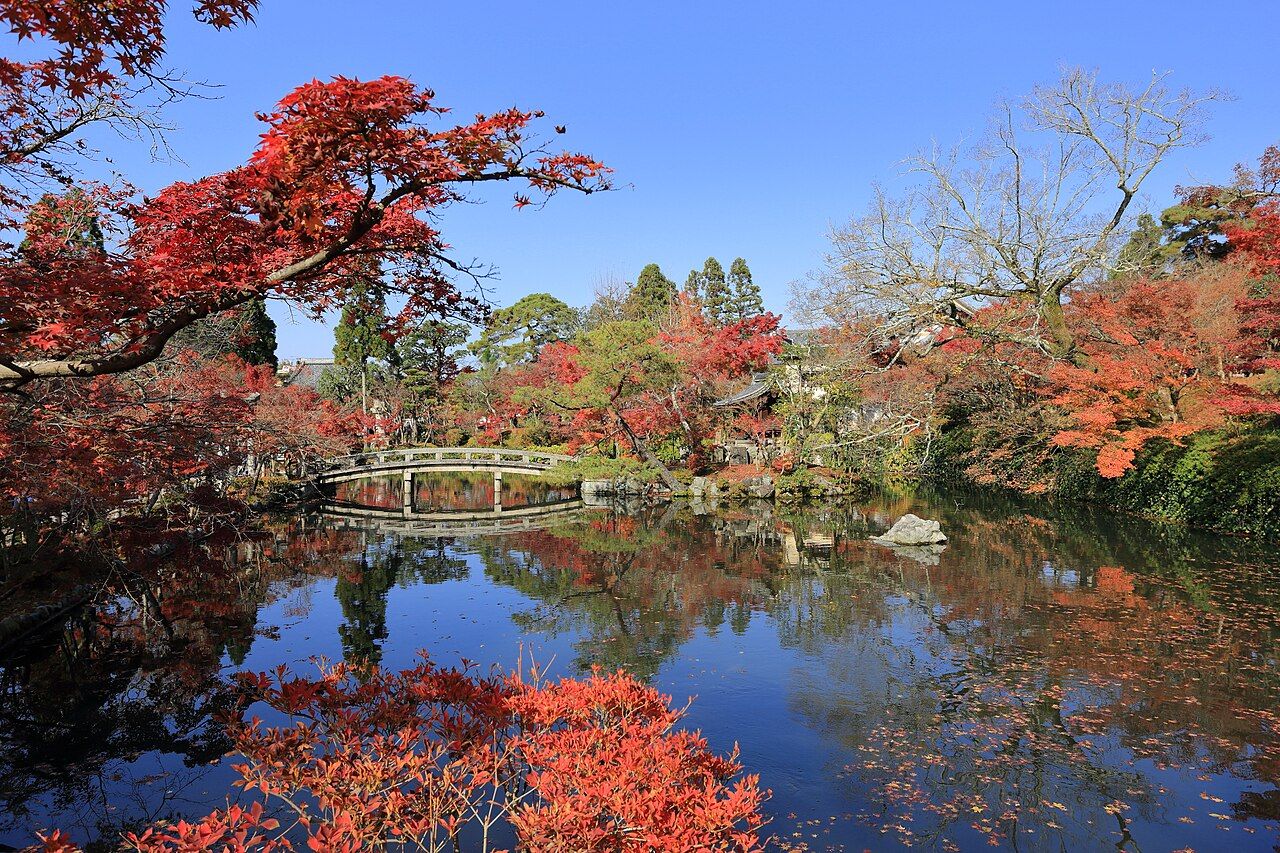
Kyoto has more than a thousand temples, and in autumn many of their gardens burst into colour. Japanese maples, called momiji, turn deep red and orange against moss, old wooden halls and still ponds, and ginkgo trees add bright yellow along the streets. Viewing the autumn leaves is an old tradition in Japan, with its own word, momijigari, and Kyoto is the place many people in the country choose for it.
That popularity is the catch. The best gardens are busy from the moment they open, and the famous viewpoints can feel like a crowded platform by mid-morning. With a little planning, though, you can still find quiet corners and see the colour at its best.
When the colour comes
The leaves in Kyoto usually start to turn in early November and reach their peak from the middle of the month into early December. The timing shifts each year with the weather: a warm autumn pushes the peak later, and a cold snap brings it forward. Gardens in the hills to the north and west tend to turn first, with the city centre following.
Forecasts for the leaves are published in Japan each autumn, much like the cherry blossom forecasts in spring, and they are worth watching in the weeks before you travel. If you have flexible dates, aim for the last ten days of November.
Eikan-dō and the eastern hills
Eikan-dō, formally Zenrin-ji, sits at the foot of the eastern hills and has long been known as one of the finest places in Kyoto for autumn leaves. Its grounds climb the slope in a series of halls linked by covered walkways, with a pagoda near the top looking out over the city. Below lies a pond with a small arched bridge, ringed by maples that blaze red in late November.
The temple often opens in the evening during the peak season, with the trees lit from below. It is a striking sight, and a busy one, so expect queues. From Eikan-dō it is a short walk to Nanzen-ji, with its huge wooden gate and its brick aqueduct, and north along the Philosopher's Path, a canal-side walk lined with trees that leads towards Ginkaku-ji.
Wear shoes you can slip off easily. Many temple halls ask you to take your shoes off at the door, and you may do it a dozen times in a day.
Tōfuku-ji and its valley of maples
In the south-east of the city, Tōfuku-ji is a large Zen temple with a famous view. A covered wooden bridge, the Tsūten-kyō, crosses a small valley packed with maples, and in late November you look down from it onto a sea of red. It is one of the most photographed autumn scenes in Japan.
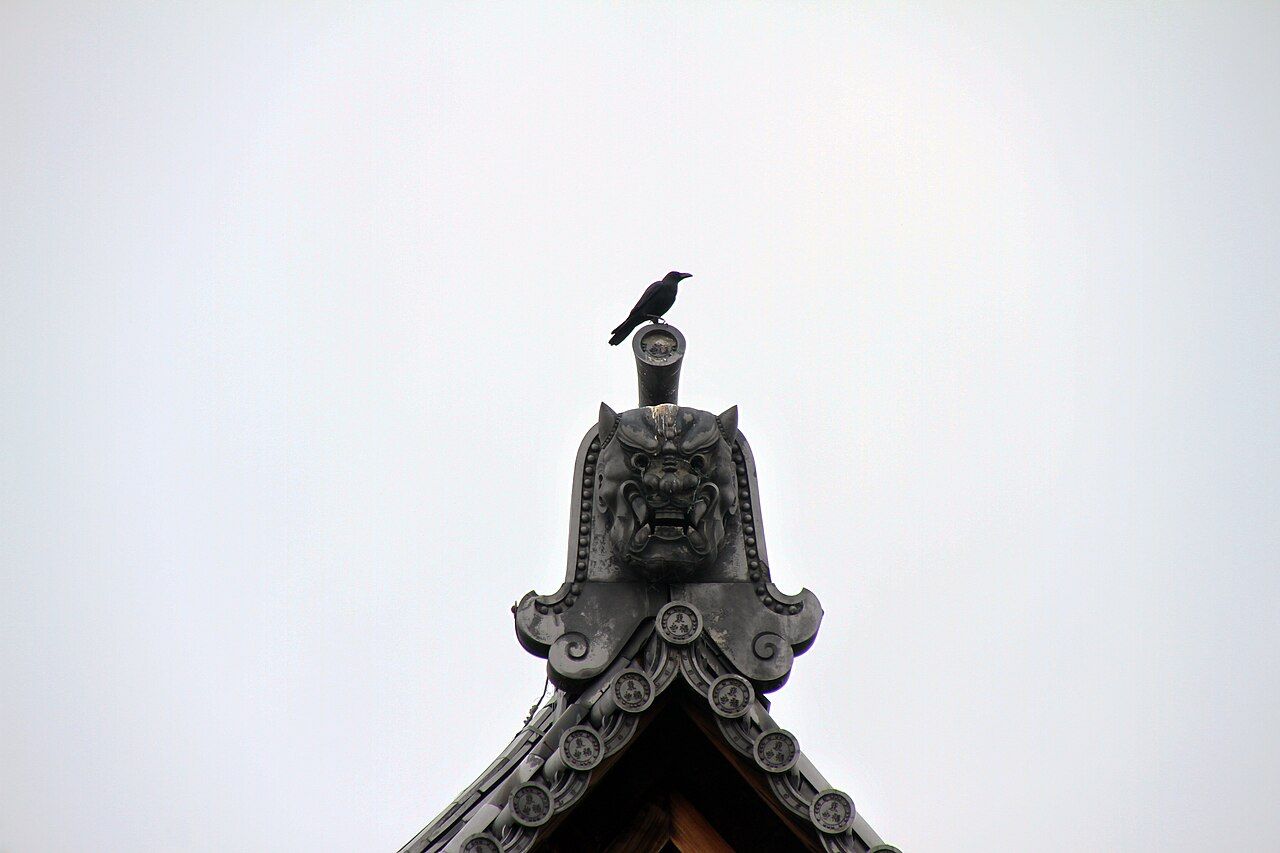
The bridge gets very crowded at peak, and staff may keep people moving rather than letting them stop for long. Arrive at opening time and head straight for the valley, then come back to the other parts of the temple later. The temple's raked gravel and moss gardens are quieter and well worth a slow look. Look up as you walk, too: the old roofs are finished with carved ridge tiles, and crows like to perch on them.
Also on the blog: Lisbon by tram and on foot
Tōfuku-ji is easy to reach by train. Tofukuji Station is served by both the Keihan line and the JR Nara line, and the temple is a short walk from either.
Kiyomizu-dera on the hillside
Kiyomizu-dera stands on the slopes of the eastern hills, its main hall resting on a great wooden stage held up by a lattice of tall pillars. In autumn the stage looks out over a hillside of maples, with the city spread out beyond. It is one of the best-known views in Kyoto and a World Heritage site.
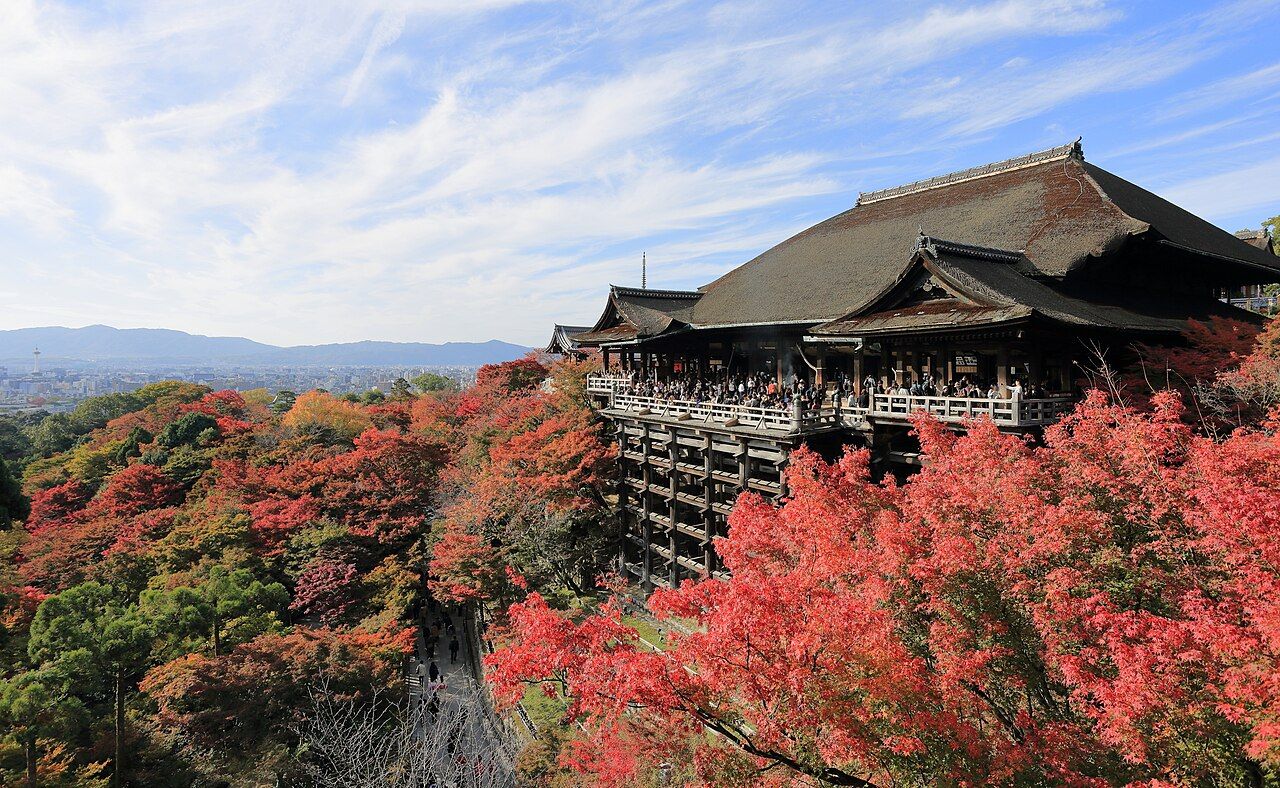
It is also one of the busiest places in the city. The narrow, sloping streets leading up to the temple fill with people from mid-morning. Get there early, or come for the evening openings that the temple often holds in autumn, and walk down afterwards through the old lanes towards Gion as the lamps come on.
Beating the crowds
The single best thing you can do is start early. Most temples open between about eight and nine in the morning, and the first hour is calmer and the light is softer. A few more ideas help:
- Visit the famous gardens on weekdays, never on a weekend in late November if you can avoid it.
- Use trains rather than city buses at peak times. The buses get packed and stuck in traffic.
- Look beyond the big names. Many smaller temples have lovely maples and only a fraction of the visitors.
- Plan one main sight in the morning and a slower walk in the afternoon.
Autumn is also the busiest season for places to stay in Kyoto, so book your room as early as you can. Some travellers stay in Osaka, a short train ride away, and come in each day.
Autumn days in Kyoto are usually clear and mild, with cool mornings and evenings that get chilly by late November. A warm layer is enough most days. Many temples charge an entry fee, some add a separate charge for special gardens or evening openings, and smaller ones may only take cash, so carry some yen.
Speak quietly in the temple grounds, keep to the marked paths, and never step onto moss or raked gravel. Tripods are often not allowed at the busiest viewpoints.
If you enjoy chasing a season, the lights and early dark of London in December make an easy next trip, and the autumn colours of the far south in Torres del Paine arrive in April and May, when Kyoto is in full spring.
Trip notes
- Best time: Just after the temple gates open
- Months: Mid November to early December
- Getting there: Train to Kyoto Station, then local lines
- Pack: Comfortable slip-on shoes, warm layer, cash, patience