Lisbon by tram and on foot
Yellow trams grind up impossible hills, the lanes of Alfama twist down to the river, and every few streets a viewpoint opens up over the red roofs of the city.
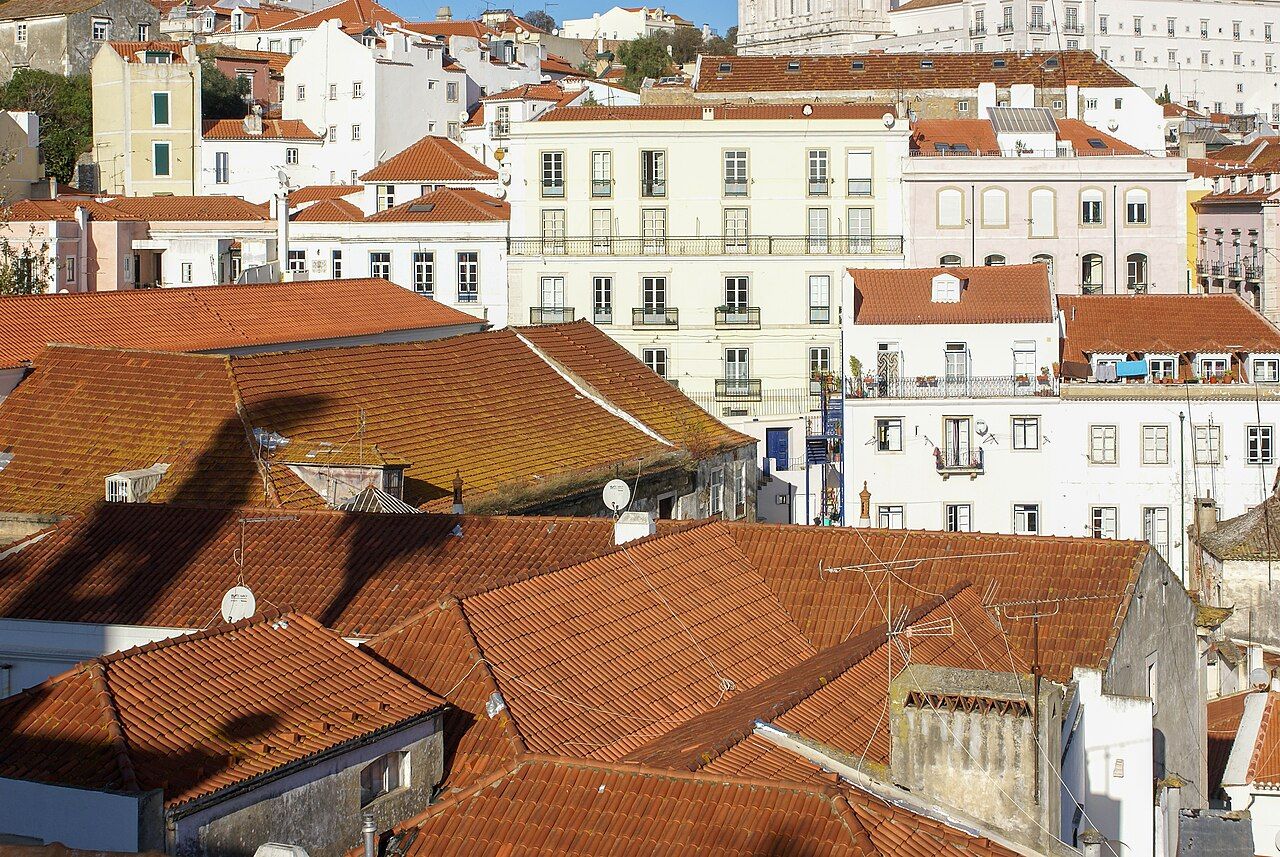
Lisbon is a city built on hills above the wide mouth of the Tagus. That makes it hard work on the legs and wonderful for the eyes. Streets climb steeply from the flat grid of the Baixa, stairways cut between houses, and at the top of almost every climb there is a terrace with a view across rooftops to the river. The old trams were made for exactly this kind of city, and riding them is one of the simplest pleasures here.
The best way to see Lisbon is a mix of the two: a tram up the hill, then a slow walk down.
Riding Tram 28
Tram 28 is the most famous line in the city. It runs from Martim Moniz, through Graça and past the edge of Alfama, down into the Baixa, up through Chiado and out west to Estrela and the cemetery at Prazeres. Along the way it squeezes through lanes so narrow that you can almost touch the walls, and it takes bends and gradients that look unlikely for anything on rails.
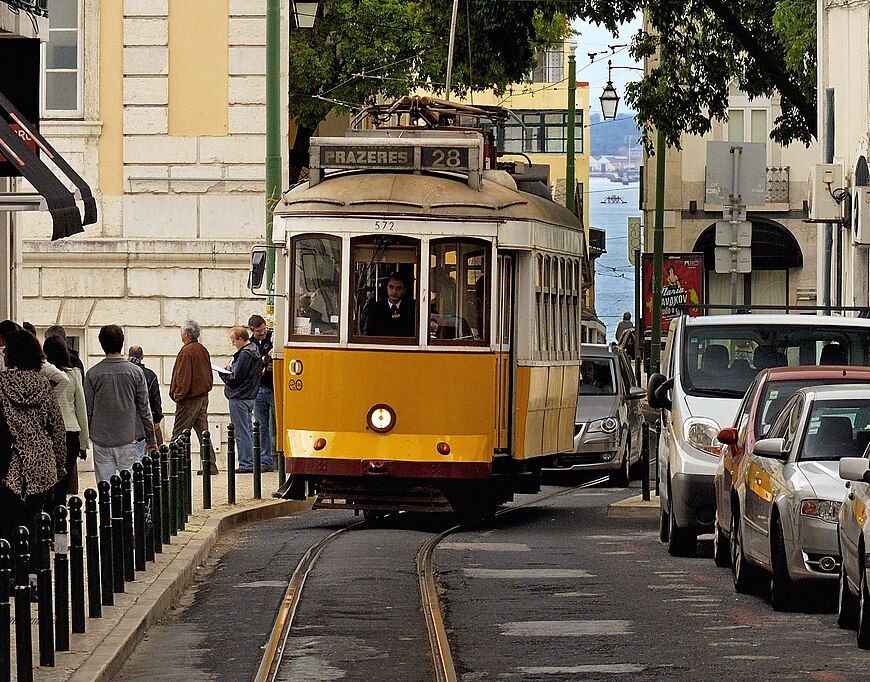
The cars on this route are small, wooden and yellow, a design that has been running on the city's network for decades. They hold only a handful of people, so queues build quickly at the main stops, especially Martim Moniz. To get a seat, ride early in the morning or start at the far end near Prazeres and travel east. Once the tram is packed, keep your bag in front of you and your phone in a zipped pocket, since crowded trams are a favourite place for pickpockets.
Fares and ticket options change from time to time. You can pay on board, but a reloadable transport card is usually cheaper and also works on the metro, buses and the city's funiculars.
Other trams and lifts
Tram 28 is not the only way up. Tram 12 runs a short loop around the castle hill and is often far less crowded. Tram 15 is a modern line that runs west along the river to Belém, useful for reaching the monastery and the riverfront there.
Lisbon also has three old funiculars, the Glória, the Bica and the Lavra, each hauling a single car up one steep street. The Santa Justa lift is a tall iron tower in the Baixa that carries you up to the level of Chiado. All of them save a stiff climb, though walking the same streets is free and often just as quick.
Wandering Alfama
Alfama is the oldest district of Lisbon, a tangle of lanes, stairs and tiny squares spread down the slope between the castle and the river. Much of it survived the great earthquake of 1755, which destroyed the Baixa, so its street plan is far older and far less orderly than the rest of the centre. Maps help only up to a point. The real way to enjoy Alfama is to get a little lost.
Start near the Sé, the old cathedral, and climb. You pass washing hung between windows, tiled facades, small churches and doorways where neighbours chat across the street. In the evenings, music drifts out of small rooms where fado is sung, the slow, aching songs that grew up in these lanes. Mornings are quieter and better for photographs.
Also on the blog: London in December
Above Alfama stands the Castelo de São Jorge, a hilltop fortress with walls and towers looking over the whole city. There is a charge to enter, but the views from its walls are among the widest in Lisbon.
The miradouros
A miradouro is a public viewpoint, and Lisbon has dozens. Some are simple terraces with a bench and a railing. Others are small gardens with tiled walls and a kiosk selling drinks. These are the ones to start with:
- Santa Luzia and Portas do Sol: two terraces next to each other above Alfama, with views over the rooftops and church towers down to the river.
- Graça: higher up, with pine trees and a broad view west towards the castle and the Baixa.
- Senhora do Monte: the highest of the central viewpoints, quiet and wide open.
- São Pedro de Alcântara: on the other side of the valley in Bairro Alto, looking back across to the castle.
Sunset is the popular time, and the terraces fill up fast. For calm and soft light, try the first hour after sunrise instead, when you may have a viewpoint almost to yourself.
Walking the hills
Lisbon's pavements are made of calçada, small blocks of white and black limestone laid in patterns. They look lovely and they are polished smooth by centuries of feet, which makes them slippery downhill and treacherous when wet. Shoes with good grip are the single most useful thing you can pack.
Plan walks to go downhill where you can. Take a tram or a lift to the top of a district and drift down through it towards the river. Carry water in summer, rest in the many small squares, and do not try to see everything in one day. The hills slow everyone down, and that is part of the city's rhythm.
Timing Lisbon
Spring and autumn are the most comfortable seasons, with mild days and plenty of sunshine. Summer is hot and busy, and July and August bring the biggest crowds on the trams. Winter is mild and green but often wet, and the calçada gets slick in the rain.
Lisbon is a city of slow climbs and big views. If you enjoy days like these, the temple lanes of Kyoto in autumn offer the same reward for early starts, and the wild coast of the Nā Pali coast shows what steep ground looks like when the sea gets the last word.
Trip notes
- Best time: Early morning or late afternoon
- Months: March to June, September, October
- Getting there: Metro to Baixa-Chiado, then walk uphill
- Pack: Grippy shoes, light jacket, water, small day bag